The Emperor’s New Clothes

# permalink January 14th, 2011

Claiming that a work of art is nothing more than an example of ‘The Emperor’s New Clothes’ is often met with derisory ‘you just don’t get it’ eye rolling or the ‘can’t you think of anything more original to say’ look.
Yet its often the best way to describe what is rarely acknowledged: that art, particularly in a secular age, is necessarily deceitful, in a way that religion and alchemy are.
Art is a religion where you only have to believe temporarily, for 90 minutes in a movie theater, it mostly has no meaning at all, and fails most when it tries to (like anything in a white walled gallery post Duchamp). But like a magnificent cathedral its is often no less fantastic.
I’m going to build a collection of links and examples here, for a larger post on the subject.

The Genealogy of Tools

# permalink January 13th, 2011

For organisms, their shape is the phenotype, which is created by the genotype - the DNA. A true family tree is ultimately based on DNA. There is no exact equivalent for man made things, however some objects are more like the phenotype and others more like the real DNA, tools vs the things that make them.
The Midnight Moses explains what I am getting at better: “Every single manufactured object was created using a tool or set of tools, and every single tool itself was manufactured using a tool or set of tools, and so on. Every single manufactured object, therefore, possesses a vast and complicated ‘family tree’ that pares and branches back through time”.
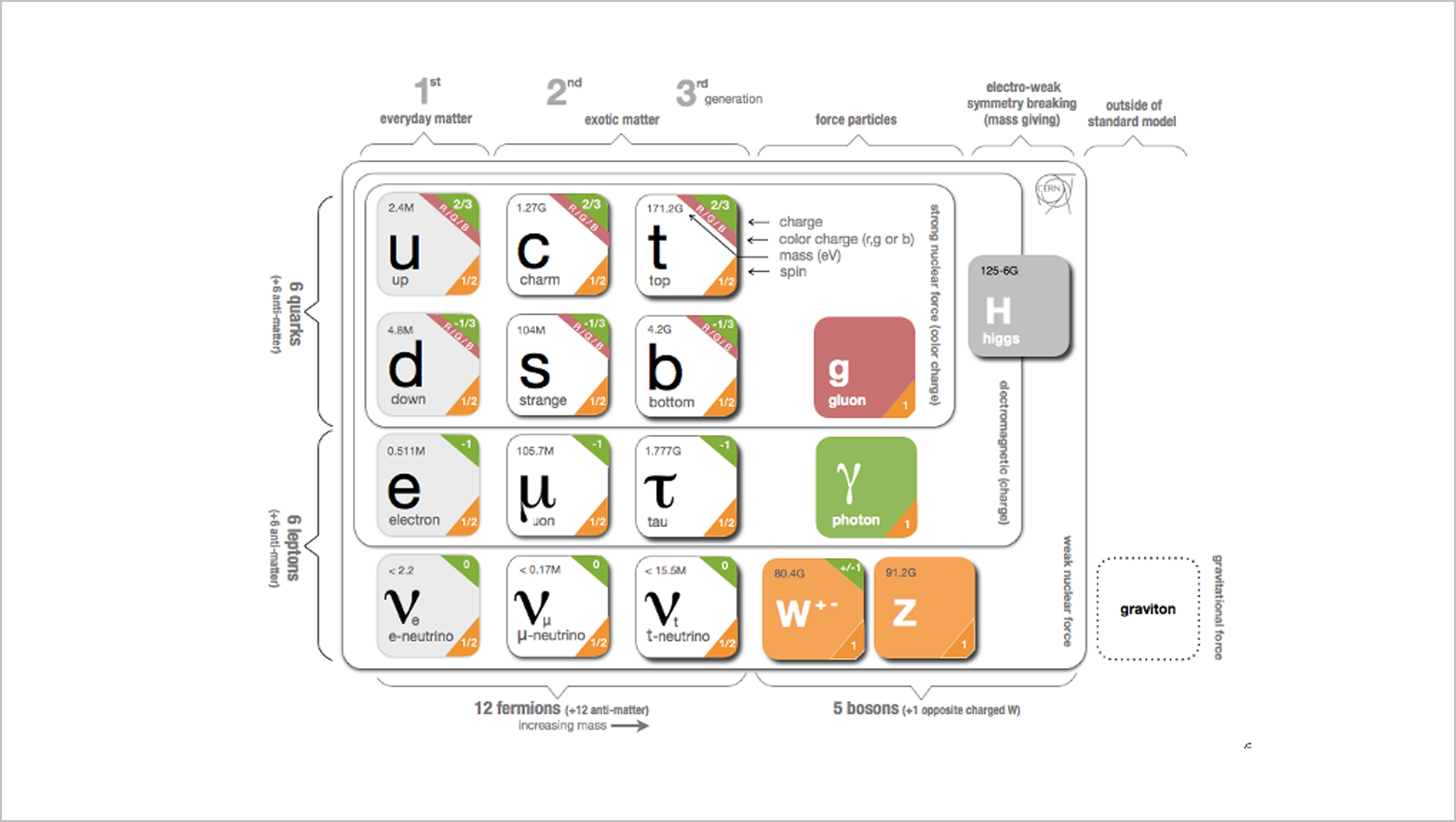
Wouldn’t it be fun to be able to trace the family history of Large Hadron Collider back to a flint axe. Ironically, since the LHC is a demolition tool for making sub atomic particles, you could potentially go full circle.
How could this be done.
First you need to separate what a tool is from any other type of object. A tool is something that can make another object. Some tools make objects that in turn cannot make another object (this is like having infertile offspring). Some tools make objects that have already existed before, and some tools can make new objects that have never existed before. A chain of tools that can make new tools that can make new tools that couldn’t have been made before, is the most interesting one from a genealogical perspective.
The process is similar to genealogy but with three differences: (1). a tool can have components with different sets of parents for each (parents being the tools that are needed to make it), for human beings, the same parents make the arms as the legs, body, liver, head etc. (2). each component can have more than two parents (there might be three of more tools that needed to exist before something could be made). (3) Tools potentially keep having offspring forever (they don’t die), a simple axe might be needed to develop something new, today.

How architecture keeps you comfortable and can be understood from the design of decent modern shoes.

# permalink October 12th, 2010

stc-cut-awayDoing some architecture again (renovating this) after fifteen years is making me look at it with a fresh eye.

For example, there is a big problem with green building terminology, it often says the opposite of what it means and many architects seem to have misunderstood the design issues because the terminology is misleading. As an example of the lunacy in terminology, in the context of building materials (and clothing), breathable usually means airtight. This often makes things hard to understand, but the design concepts are actually straightforward and I’ll try and decipher some of them here.

Most of the innovation of the last 15 years is mirrored in the modern technology used in sports clothing and most of what there is to be understood about architectural innovation, such as breathing and composite materials can be understood from the design of decent modern shoes.

Once you’ve got a building to stand up, you want to: (a) avoid water getting in by flowing, but (b) let water vapor (sweat and steam) get out by soaking and then evaporating and (c) not let too much heat to get in or out via conductance or draft.

Because building usage and climate are dynamic but building envelopes are not, there are no ideal solutions. The best you can hope for is to dampen the extreme cases and create what Reyner Banham called a ‘well tempered environment’, after all, perceiving the different seasons is pleasant, unless you live at the North Pole.
For the water vapor, air and water, buildings often have vapor barriers and air barriers. They can be the same thing. Vapor barriers are often required by code but scientifically optional and air barriers are often optional but scientifically necessary.

A vapor barrier stops diffusion of water gas through a difference in humidity. An air barrier stops flow of air through an air pressure difference caused by temperature difference (resulting in wind or convection).
Now for the hopeless terminology that leads to all the confusion.

Water vapor is a gas, but a vapor barrier is essentially to do with dealing with water (which we tend to think of as a liquid) and the effects of soaking rather than leaking. Vapor barriers are not about leaks but about surface transfer through diffusion or soaking, so vapor barriers can be made from the opposite types of material: a waterproof material such as a plastic bag (water condenses on its surface and evaporates) or, in theory (but in practice only in the case of clothing such as linen), a water absorbent material that soaks the water vapor up for a bit then lets it evaporate later. In the building case this is when people leave out a vapor barrier and use insulation which can soak up a bit of water temporarily, without damage. This ironic situation is a bit like the difference in a bulletproof jacket that works by opposite means, either bouncing bullets off (hard material like steel plate) or absorbing the impact (soft material like a sandbag).

The air barrier is not so much about heat loss as about water vapor getting trapped and condensing - i.e. the primary purpose of an air barrier is to be a water barrier. But the water gets there this time via drafts and not diffusion.
Secondly, an air barrier can be breathable. Breathable means letting water vapor out, by diffusion, while still being windproof. As above, this means you can use the opposite approach - thick water absorbent and wind proof or thin wind proof with little holes for diffusion (think Goretex).

And the confusion doesn’t just extend to the terminology, it extends to the practice:
Vapor barriers are often required by code but science suggests they should be optional. Their position is not optional yet it is - i.e. it should always go on the humid side of insulation, but this can be on the inside or the outside depending on the climate and the occupancy of a building, both of which change. Buildings in Florida are often the reverse, in terms of moisture control, from New York. Vapor barriers, although they are dealing with a gas, do not have to be air tight, they just need to cover enough surface area.

Air barriers on the other hand are optional in codes (shortly to be mandatory) but a proven idea scientifically. You can put an air barrier anywhere in the envelope, but it should form a continuous sheet - i.e. be airtight. An air barrier can be a vapor barrier as well (in which case you should put it in the right place, warm side, or more accurately ‘more humid side’ of the building envelope).

If an air barrier is non-breathable, don’t stick it to the cold side (outside) of insulation without a gap, or water will condense and not be able to evaporate. In general, where water condenses there should be some air flow on the side of the material it condenses on.

Air barriers mean air tight, and they are the principal behind the idea of things such as Passive Homes which seal things up like a thermos flask then have to add drafts back to get rid of sweat and steam via fans.

Ironically, because the science behind Passive Houses is psychologically clinical and unnatural it seems opposite to the idea of traditional building styles which controlled the environment automatically by imperfect fit and natural materials. Yet the people who champion the latter are the natural allies of what Passive Homes are trying to do - be ecologically sound. There is a commonly held miss-belief that Passive Houses, because they are air tight aren’t breathable. Traditional materials are breathable, but so are air tight buildings, since the breathability refers to moisture release through diffusion rather than movement of air.

To remove the confusion:
1. Think of a vapor barrier as a ‘water condenser and evaporator’ system (it need not be a barrier at all and its a mechanism rather than a thing). You need a system, but you don’t necessarily need the thing.
2. An air barrier is a genuine barrier, it’s a ‘draft excluder’, but the fundamental problem is not the air but the water it carries getting left behind. An air tight system can still be breathable and be a combination air and vapor barrier, but the word breathable would be much better if it were replaced with something like ’self drying’.
In other words a building design should stop water getting trapped in bits of the building envelope and get rid of any that does through evaporation, using air and vapor barriers.

You need a self-drying draft excluder. That’s all there is to it.

Tim Berners-Lee. Confirming The Exact Location Where the Web Was Invented

# permalink July 8th, 2010

I wrote to Tim Berners-Lee after exploring CERN last week, looking for the location where the web was invented, his replies regarding the exact locations are below (I’ve put up photos of the excursion as an Oobject list, here ).
[ Update, Jan 2012: One of the more interesting consequences of the details below, that hasn't been picked up anywhere, is that technically the web was invented in France, not Switzerland.

bldg31

The blue marker on the map above shows building 31. Note where the border is.

I'll bet if you asked every French politician where the web was invented not a single one would know this. The Franco-Swiss border runs through the CERN campus and building 31 is literally just a few feet into France. However, there is no explicit border within CERN and the main entrance is in Switzerland, so the situation of which country it was invented in is actually quite a tricky one. The current commemorative plaque, which is outside a row of offices where people other than Tim Berners-Lee worked on the web, is in Switzerland. To add to the confusion, in case Tim thought of the web at home, his home was in France but he temporarily moved to rented accommodation in Switzerland, just around the time the web was developed. So although, strictly speaking, France is the birthplace of the web it would be fair to say that it happened in building 31 at CERN but not in any particular country! How delightfully appropriate for an invention which breaks down physical borders. ]

There is a plaque in a corridor in building 2, but no specific offices are indicated and there is some ambiguity as to what happened where, in building 31. Thomas Madsen-Mygdal has a gallery showing locations in building 31 and 513, but there are very few places on the web documenting these places. I took photos of the plaque, such as the one here, with Creative Commons licenses, so that they could be used elsewhere.

The reason I’m interested in this is that recognizing the exact places involved in the birth of the web is a celebration of knowledge itself rather than belief, opinion or allegiance, both politically and spiritually neutral and something that everyone can potentially enjoy and feel a part of.

Secondly, many places of lesser importance are very carefully preserved. The place where the web was invented is arguably the most important place in 2 millennia of Swiss history and of global historical importance.

Lastly, this kind of information is perhaps overlooked as being so obvious as to be common knowledge, exactly the sort of thing that sometimes gets forgotten. I’m not suggesting that the locations have indeed been overlooked, but they are not preserved or all indicated and the people I spoke to didn’t know the full details. So just in case…

DG: Where were you (at CERN and which building/rooms or home) when you thought of or were writing the original proposal for the web in 1989?

TBL: I wrote the proposal, and developed the code in Building 31.
I was on the second (in the European sense) floor, if you come out of the elevator (a very slow freight elevator at the time anyway) and turn immediately right you would then walk into one of the two offices I inhabited. The two offices (which of course may have been rearranged since then) were different sizes: the one to the left (a gentle R turn out of the elevator) benefited from extra length as it was by neither staircase nor elevator.
The one to the right (or a sharp R turn out of the elevator) was shorter and the one I started in. I shared it for a long time with Claude Bizeau.
I think I wrote the memo there. [ dg: proposal for the web was written, i.e. web was 'invented' in room 2-010 ]
When I actually started work coding up the WWW code in September 1990, I moved into the larger office. That is where I had the NeXT machine, as I remember it. [ dg: larger office, i.e. where first web server was and software was written, where web was 'created', is room 2-012 ]
The second floor had pale grey linoleum, the first floor, where Peggie Rimmer had her office, had red lino; the third floor had pale yellow lino. The ground floor had I think green lino. Also on the second floor was the Documentation et Données, later Computing and Networking, HQ with David Williams at one point heading it up.

DG: For the development of the web, can you remember which offices were used in building 31 or off the corridor shown in building 2 in the attached image?

TBL: Building 2 I never had an office in. Robert Caulliau did, and various students, including Henrik Frysyk Nielsen and Hakon Lie, and Ari Luotonen, worked there.

DG: Was some of it inspired at home and was that here: Rue de la Mairie, Cessy (France)?

TBL: My house was [exact address removed since people live there] Rue de la Mairie, but I rented it out for some time around 1990 and actually lived in Les Champs Blancs, Chavannes de Bois [Switzerland]. But then we moved back to Cessy for a year before leaving.

[ Update: I went back and took some pictures (Creative Commons license so you can use them) of the room where TBL created the original proposal for the Web. And have some exciting news to share about it soon! ]

room1

Door to the room where the web was created

room2

The Polish coder who currently occupies the room didn’t know its significance. He was very happy to find out.

room3

Ben Segal who helped setup the original web server in the room where the web was created

Connections’ 911 Connection. A Perfect Coincidence to Show There are no Conspiracies

# permalink June 7th, 2010

People look for patterns and co-incidences, and in the modern environment there are more co-incidences than our brains are calibrated to think are normal - what Richard Dawkins calls the PETWAC (Population of Events That Would Happen to Appear Co-incidental).

What follows below doesn’t appear to figure on the web as a 911 conspiracy, but it could easily. It sends shivers up my spine, but the fact that it exists among the millions of hours of video available to watch is merely an example of the increased PETWAC compared to when we drifted across the African Savannah hundreds of thousands of years ago in small bands of people with limited experiences available. This is the factor which creates the illusion that drives conspiracies.

1. The First Episode of Connections opens with James Burke Outside of the World Trade Center in New York. (Opening -> 0:48)

2. A disaster is brewing. (5:18 -> 6:50)

3. (8:45 ->) A plane is heading towards the buildings at the opening. Its flight number…

Switch

# permalink April 23rd, 2010

clegg switch

Switzerland and Islam

# permalink April 23rd, 2010

switzerland

On the left: Swiss poster demonizing Islam, to support the ban on minarets. On the right: Swiss poster proclaiming an understanding of Arab culture, soliciting funds for a private bank.
The controversy around the Swiss racist anti-minaret poster was understandable - it’s in the style and colors of pre-war Nazi propaganda for heaven’s sake. But Swiss racism is more complicated than it would first appear, particularly when it comes to money.
Anti Muslim sentiment in French speaking Switzerland in particular, is possibly stoked by irrational fears of poorer French immigrant Muslims crossing the border to seek work in prosperous Geneva from its French hinterland. The reality of Geneva is that it is culturally quite Arab, even if the Swiss would deny it. The world’s most expensive watches and private banking make Geneva a playground for oil rich Middle Easterners, a cliche - but true. and to prove it, these type of Muslims are welcomed at the airport, by posters in Arabic proclaiming an ‘in-depth understanding of Arabic culture’, with little sense of irony.

Sheep: Truth vs Fiction

# permalink April 5th, 2010

sheep_truth_vs_fiction

My son likes Shaun the Sheep, a cute character created by Wallace and Gromit’s Nick Park. Yesterday’s trip to a petting zoo revealed the diabolical, moth-eaten, nightmare-generating monster on the right, which threatens to leave him mentally scarred forever.

[Interestingly, he just pointed to the thing on the right and said 'Shaun the Sheep'. Which is like pointing to Jabba the Hut and saying Leia. ]

Social Networks and Creativity. Why Geneva Might be a Better Model than New York

# permalink February 24th, 2010

How do you bump into new people in a social network?

[ The social graph - how do I meet new people here? ]
I have been back in New York for less than 48 hours and have twice bumped into the person that is the contact link to the people I most want to meet when I’m here. This kind of serendipitous interaction almost never happens in Geneva, where I’m now living. I suspect that its occurrence is non-linear (i.e. it requires a certain critical mass of interaction for it to happen) and that this rather than planned meetings are what make cities centers of creativity and innovation. Understanding this process perhaps has important implications for the design of social networks.

[ Chance Meeting (in NY), by Martin Lewis ]
In some ways, this is obvious, but the distinction between planned and unplanned interaction has definite consequences. Creativity is often viewed as an active process of invention by intelligent and creative types, however what if it was the other way around - a question of accident and any person of average intelligence being in the right place at the right time?
As an example, I became an architect (something that contrary to popular misconception is largely an art not a science), having originally come from a scientific background. People who are scientists often look for a description in words as to why a work of art is interesting, its why rather uninteresting artists like Escher are nerdy favorites - the idea is more interesting than the picture. I started architecture by producing designs that all had a story but weren’t visually original, but I remember the day at architecture school when I really ‘got it’, when I was able to design something new rather than the kind of superficial gimmick that a rational approach to design always produces. The way that I designed something original was by accident - I created enough mess around me that I made a mistake that actually turned out to be interesting.

[ Escher - the scientist's artist ]
By creating an environment where mistakes were likely to happen and by editing the errors that arose, I was able to be creative. Not only that, but the creation of mess that reduced my ability to be organized but increased my ability to do new things, was a perfect cliche of the creative stereotype. What if the bohemian mess and individualism weren’t a byproduct of creativity, but the thing that enabled creativity in the first place, the thing that allowed accidents to be selected to create something that could not have been imagined?

[ Francis Bacon's studio - Francis was a painter not an accountant, and his workplace was messy ]
This idea of accidental design, is how Murray Gell-Mann describes the process of evolution: as “the accumulation of frozen accidents”. It means artists should perhaps not get too big-headed, that if humans can be created without a designer god that art can be created without a human with extraordinary powers. It means that innovation and design is a by product of selection of accidents and dependent as much on a particular environment as the people who occupy it.

[ Murray Gell-Mann - Evolution happens through the accumulation of frozen accidents ]
What is important for creativity is an environment that allows for accidents. But accidents are important for things beyond the creative arts: for meeting people and getting things done, from doing deals to dating - for social networking. Social networking requires chance interactions, but does this mean that social networks need to replicate the bumping into new people that a city with the size and cultural openness of New York offers over Geneva.
The online world is more artificial than the real world, by definition, and therefore social interaction can be stilted and somewhat unsatisfactory, even if it can span the globe instantaneously. From flame wars to the fact that sarcasm rarely goes down well online, the online experience of communication is not quite as interesting as the real world, its a bit like living in Geneva rather than New York.
Perhaps there is something to be learned from Geneva rather than New York when it comes to finding out how to create serendipity in a more artificial social environment? In which case, the thing to look at might be golf. Intermingling in Geneva is largely through sporting activities in the mountains and on the lake, and as elsewhere, on the golf course.

[ Golf - not exactly hip or bohemian ]
Despite requiring a massive amount of time and money - taking most of the day off ‘work’ for the same hourly rate that people earn, golf ironically shares something in common with casual bumping into people and the resultant creativity. When you play golf with someone, you spend several hours with them but there is no requirement to communicate, you can either play golf, or you can play golf and chat. It creates a very simple framework for deals to happen by accident, though unplanned unstructured communication without pressure.

[ Geneva - If you can make it happen here you can make it happen anywhere ]
Golf allows for people to communicate without a prior agenda and deals to be done serendipitously. And it allows for this to happen in places as far removed from the creative enclaves of lower Manhattan and Brooklyn and its bohemian denizens as a Swiss golf course infested with private bankers. If you can make it happen here, you can make it happen anywhere. In other words, golf creates a creative networking environment without requiring a creative environment or creative people. And like the online world, it all make believe, taking place in a virtual recreation of the Scottish countryside in places like the Nevada desert. Pretty amazing really.

[ Virtual reality - a Las Vegas golf course recreates a quasi Scottish landscape in the Nevada desert ]
For social networking to create a replicatable model for serendipitous interaction which overcomes the giant drawback of the fact that people aren’t actually there, perhaps its needs something more akin to golf than a bohemian bar and perhaps it needs to look at how people manage to network in a place that is difficult, like Geneva, rather than one which is easy, like New York.

Imagining The Tablet from a Design Perspective

# permalink January 21st, 2010

Computers used to occupy a whole floor of a building, then a room, a desk and ultimately a lap. The laptop is the default form factor for computing, with the smartphone occupying an emerging niche for on the go. But while the laptop replaces the desktop in most cases, the smartphone doesn’t replace the laptop, but is something to have in addition to it.
The tablet will replace neither the laptop or the smartphone, so matter what the hype, it is destined to be an ancillary form factor for computing devices.
mac-pc
[ The Kindle just isn't cool. I'm a Tablet. And I'm a Kindle.]
That being said, the tablet will fill the niche that the Kindle aspires to. It’s an area that generates lots of press, because its the one occupied by print media itself which is currently delivered via the medium of dead trees. Its an anachronism that highlights an obsolete business model looking for a savior, but the Kindle isn’t it. Amazon’s device placed its bet on an irrational design choice which was based on thinking about dead trees rather than what’s on them, e-paper vs a screen, a product decision which removes more functionality than it adds. The current state of the art E-paper renders the Kindle a black & white, video-less computer that you can’t read in bed without the light on. The Kindle is a bad design because it focuses on the medium (paper) rather than the message ( video, sound, color). Electronic books, magazines and newspapers need not look like their paper equivalent, especially the drab black and white variety, they will have color and videos and will look much more like a web site than a dead tree. Apple know this and they will crush the Kindle.
The tablet will be positioned as the ultimate media reader, it will kill the Kindle near instantly by focusing on what the Kindle tried to, but wrongly - the screen. To differentiate reading the Vogue website on a laptop from reading Vogue on the tablet, Apple will arrange custom sites and deliver a device with a screen resolution and quality never seen before. Apple will deliver something with the interaction of a website and the seductiveness of a glossy magazine. It will offer syndicated, tablet-enhanced content and will be hailed as the savior of an entire industry.
But perhaps the notion of a tablet as an e-reader misses something much more interesting? Newspapers and magazines are not that interesting - despite the business model problems which create a lot of noise, magazines and newspapers already have a savior: common or garden websites. The fact that these website have different economics that traditional media doesn’t like is tough luck. Whatever Apple tries to do, a tablet site will basically be a pretty website, and by following the iTunes Music Store or App. store model, unlike with music or software, Apple will be taking something that is already legally available on the web and corralling it into a controlled, walled-garden environment under the yet-to-be-proved auspices of value-add.
In terms of hardware, the tablet might offer something qualitatively superior but it won’t offer much that a laptop doesn’t already. In fact, without a stand, or a keyboard that can be used with two hands while holding it, it could be regarded as a willful, unergonomic gimmick, something based on the idea that a digital newspaper doesn’t look right with a keyboard. This is the UI of science fiction movies, not the real world, nonetheless, such purity will play into the hands of Apple expertise and the tablet will no doubt be an extremely minimalist and elegant device to lust after.
But it could be the seductive purity and minimalism of the device that may cripple its true potential, if it doesn’t do what tablets traditionally offer beyond ordinary devices - allow you to draw with them. The problem is that drawing on a tablet would require stylus input (or at least using a regular pen) and the whole ethos of the iPhone generation Apple interface is geared around using a finger instead. Jobs famously stated ‘now what’ after dropping a stylus with an iPhone prototype and that lead to the undoubted elegance of not needing to carry around a pen, when a finger will do. Unfortunately, fingers aren’t good for painting unless you are a three year old.
palm2
[Unfortunately Pen Computing has been Historically Uncool, But it Doesn't Have to be That Way]
Why is pen based drawing so important, isn’t that a niche requirement for CAD using architects or Photoshop and Illustrator wielding graphic designers? And anyway, few people have either the inclination or ability to draw, even if they have the tools to do so.
Touch based computing isn’t just a feature, its a fundamental shift in the way we interact with a computer and it represents as big an interface development as the transition from the command line to mouse & icon. With a mouse, interaction is remote and clunky, but with touch, it is direct and allows precision and subtlety, through gestures. This is where the iPhone version of the Apple OS represents the way forward for all devices, and why it will run on the tablet. But if the tablet shows off the difference between it and a laptop through the precision of a wonderfully high resolution screen, surely the precision of input offered by allowing you to draw with it using a pen would open up unknown potential, taking drawing based UI from niche to mainstream.
Sadly, drawing will be perceived as just that, niche. The inelegant Palm Pilot-like connotations of stylus input will make it very unlikely that considerable design effort will be applied to making sure an already beautiful and precious screen doesn’t break when you apply 50 times more pressure on it than a finger, by using a fine point.
A tablet is in many ways laptop without its own keyboard or stand and there isn’t much that you can’t in theory do on a laptop that you can on a tablet - apart from draw. Drawing with a pen is the one thing a tablet is made for, that can’t be done comfortably on the tilted screen of a laptop and it would surely be the thing that opens up genuinely new avenues for undiscovered applications, rather than reading a newspaper.
01_apple_newton
[The original Apple tablet]
Sadly the future of a tablet for drawing with may rest with the long forgotten Newton. I hope I’m wrong.